Why Mothers Feel Exhausted (and What Can Help)
I was in my bedroom getting ready for a family day out.
In the next room, my husband and son were in the middle of a conversation that soon escalated and became heated.
It came to a head when I heard my son stomp down the hall and slam his bedroom door.
A few minutes later, my husband came in, frustrated and needing someone to vent to, and began giving me a blow-by-blow of what had just happened in the kitchen.
I knew what he needed.
Emotional validation.
A safe place to let out all the frustration he was feeling…
And I also knew that later that morning, I would likely be having a very similar conversation with my son.
I could already feel myself stepping into that familiar role, holding both sides, softening the edges, translating, absorbing, because I knew that if we wanted the day to go smoothly, this was the accommodation I would need to make.
This is something I do every day.
The referee.
The peacemaker.
The one who holds the emotional middle in my family of five.
But on this particular morning…
I was done.
A quiet but firm thought rose up in me: “Who made me the emotional buffer for this whole family?“
And then something deeper landed.
I didn’t become this in motherhood.
I have been doing this my whole life – even as a child.
And I was exhausted.
I remember thinking, “I can’t be the only one who does this… can I?“
So I took that exhaustion, that frustration, that deep, bone-tired awareness, and I turned it into a carousel on Instagram.
What came back was something I didn’t expect.
The post was viewed by over 140,000 people.
Thousands resonated.
Hundreds shared their own experiences.
It was saved, shared, and quietly held by so many.
It seems like many, many mothers are carrying this, too.
Which led me to wonder:
What is emotional buffering?
How is it that we come to carry this role?
And most importantly, what does it look like to begin caring for ourselves inside of it?
What is the Emotional Buffer?
The emotional buffer is the person in the family who absorbs tension before it spills, softens conflict before it escalates, translates between people who don’t easily understand each other, anticipates needs, reactions, and emotional shifts and holds the emotional “middle” so others don’t have to.
In many families, this role quietly falls to mothers.
And in neurodivergent families, especially where a child is in burnout, this role doesn’t just exist; it intensifies.
Because now it’s not just about personalities or communication styles.
It’s about nervous system mismatch.
Different sensory thresholds.
Different capacities.
Different needs for autonomy, predictability, and connection.
So the mother becomes: the regulator, the interpreter, the shock absorber and the bridge, all at once.

When Does Emotional Buffering Start?
For many of us, this didn’t start when we became parents.
It starts much earlier in homes where emotions felt big, unpredictable, or unspoken, needs weren’t clearly named or safely held, and neurodivergence existed but wasn’t understood
I know that this was the case for me in my childhood home. My father, who I suspect has undiagnosed AuDHD, and had a traumatic childhood, was extremely volatile. As a survival strategy, I learned to scan the room, pre-empt conflict and to soothe, fix and manage the emotions of the adults around me. I become the “perfect child”, “easy one” – “the peacemaker”.
Not because this was who I naturally was, but because it helped me to feel safe.
That adaptation was not a flaw. My nervous system, in its intelligence, moulded itself this way to ensure my survival.
But what kept me safe then has quietly become what exhausts me now.
Why Emotional Buffering is so Draining
No one was ever meant to hold this for an entire family system.
Not all the time. Not without support.
Emotional buffering often means that your body holds what others can’t, your needs go offline to stabilise the system and your nervous system stays in a state of readiness.
Over time, this can look like deep, ongoing exhaustion, never fully switching off; resentment you don’t feel allowed to name; and losing yourself inside the role, not knowing where you end and others begin.
From the outside, it often goes unseen, because it doesn’t look like “work.”
But it is.
It is emotional labour.
It is nervous system labour.
It is relational survival work.

When Safety is at Stake: The Added Weight in Burnout
In some families, especially where a child is in burnout, this isn’t just about emotional tension.
It’s about safety.
When a child is volatile, aggressive, or harming themselves or others, the stakes are different.
This isn’t just conflict you’re buffering. It’s a real danger you are trying to diffuse.
When my daughter was in burnout, I found myself watching closely, anticipating escalation, gauging when to step in before things went too far, and trying to keep everyone safe.
And my body knew it.
And if this is your current reality, you will know that this is not imagined pressure. It is lived, moment-by-moment vigilance.
How This Affects Parent Partnerships
In many neurodivergent families, another layer of complexity is added. Often, partners or co-parents may also be neurodivergent, whether that is known or not.
And sometimes this can show up as more rigid or black-and-white thinking, difficulty shifting perspective, a strong need for predictability and safety, a reliance on co-regulation within the partnership, and interpreting behaviour through a compliance lens rather than a nervous system lens.
So while you are seeing your child’s behaviour through the lens of distress, overload, and dysregulation, they may be seeing behaviour that needs to be corrected.
And so you become the bridge.
The one who validates your child’s experience and translates what is happening in their nervous system. The one who softens your partner’s response while also trying to prevent escalation before it turns into harm.
You are buffering in multiple directions at once.
And underneath this, there is often something many mothers don’t say out loud: Fear.
Fear that if you step back, if you let the other parent handle it without support, it could make things so much worse.
That your child might not feel safe.
That things could escalate further.
That harm could happen.
And in many cases, because this can be life-threatening, you stay in the middle.
Not because you want to control everything, but because you are trying to protect your world from spinning horribly out of control and everyone in it.
But over time, this creates another kind of strain, because while you are holding everything together, your partner may not get the chance to build understanding or flexibility.
Your child may not get the opportunity to experience repair in that relationship, and you are left carrying more and more of the emotional and relational load.
It can begin to feel like you and your child are on one side, and your partner is on the other, and that can quietly create distance, tension, and loneliness inside the relationship and inside your family.
Meeting Ourselves With Self-Compassion
Before boundaries.
Before anything changes.
Before doing anything differently.
There is something even more important.
How you meet yourself inside this.

Many mothers, when they first see this pattern, feel frustration with themselves, guilt for “over-involving”, and pressure to stop doing it from themselves or other family members.
But this role didn’t come from nowhere.
It was shaped over years, often from childhood and from a place of needing to feel safe.
So the first step isn’t: “How do I stop doing this?”
It’s: “Can I meet myself with compassion here?”
Compassion for how much you’ve been holding, how quickly your body steps in to protect and how deeply you care about keeping everyone safe.
Compassion for the part of you that learned: “It’s safer if I hold this together.”
Because without that compassion, awareness can quickly turn into self-criticism, and it can become just another layer you have to carry.
But with compassion, awareness becomes something softer. More spacious. More sustainable.
From Automatic Buffering to Conscious Choice
It might sound like:
“Of course, I stepped in. That makes sense.”
“My body is trying to keep everyone safe.”
“I can go gently with myself as I learn a new way.”
When this becomes something you can see, it creates a small but powerful shift.
You are no longer automatically pulled into the middle; you have a moment where you can choose.
And sometimes that choice might still be to step in, but it begins to come from intention, rather than urgency or habit.
Not in doing everything differently overnight, but in noticing, choosing (when it feels safe to), and meeting yourself with kindness along the way.
Because you are not the problem here.
You are someone who has been holding a lot for a very long time.
This isn’t something you “fix.” It’s something you deserve support inside of.
Holding the Nuance and Complexity of Emotional Buffering
There is no simple answer here.
Because this is not just about communication.
It is about safety, capacity, nervous systems and deeply ingrained ways of understanding the world.
What can begin to shift things, gently, over time is this: Moving from being the constant buffer to becoming a supported bridge.
Where you are not the only one holding safety. Your partner is slowly brought into understanding (at a pace they can tolerate), your child’s needs are still honoured, and you are no longer carrying this alone.
This is delicate work.
It asks for awareness, patience, compassion and spaces where you can be held while you are holding so much. This is the work I do with parents in my individualised coaching and global parent community, From Burnout to Balance.
If this is your reality, I want to say this clearly: of course, you are exhausted.
You are not just parenting.
You are managing risk, holding emotional safety, translating between nervous systems, and protecting the people you love most.
This isn’t something you have to carry alone.
This isn’t something that changes through doing more, but through being gently supported inside the moments you’re already living.
This is the heart of Rehumanising Parenting
Not asking more of yourself. Not overriding your own needs to care well for others, but remembering that you are human too.
That your nervous system matters. That your capacity matters and you are allowed to be supported in the same way you support everyone else.
This is where the shift begins.
Not in big, sweeping changes, but in small, steady returns to yourself.
A breath.
A pause.
A softening.
A reminder that you don’t have to hold everything at once.
This is exactly why I created Tiny Anchors

A gentle series of small, supportive moments you can return to on the hard days when you’re holding a lot, when everything feels heavy, and when you need something simple to help you come back to yourself.
You can begin your Tiny Anchors journey here.
The Person Who Wrote This Blog
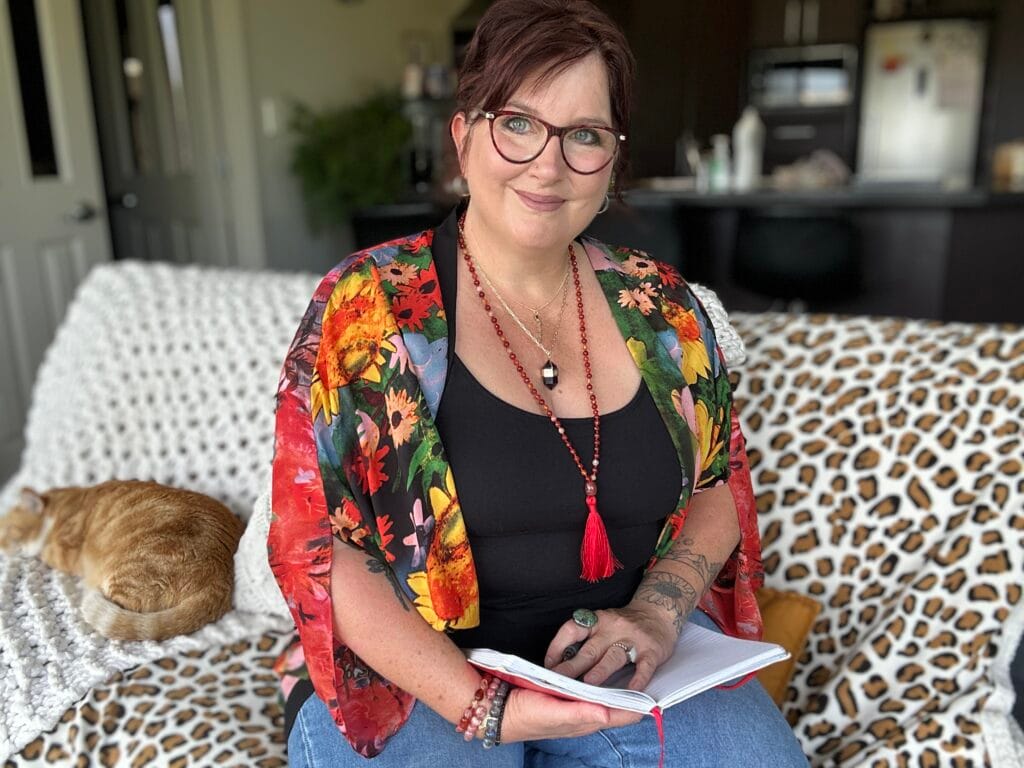
Tanya Valentin is a neuro-affirming family coach, writer, and community leader supporting parents of neurodivergent children through burnout recovery.
Drawing on lived experience, nervous-system-informed practice, and relational facilitation, her work explores grief, identity, and the quiet return to self-trust.
She is the founder of the supportive community who are parenting neurodivergent children and teens in burnout, From Burnout to Balance.
Have you enjoyed reading this blog? Subscribe and receive fresh reflections, parenting resources and validation every time I push publish.