Why Low-Demand Parenting Does Not Start With Lowering Demands. It Starts Here.
Parenting a neurodivergent child, especially one in burnout, can be hard on so many fronts.
But if I am being honest, in most parenting seasons, it is not my children I have found hardest about parenting them.
What I find hard is the unrooting.
The constant reparenting of myself.
The unlearning of a behaviourist way of parenting that I was raised in and taught to pass on as a parent and trained in as a teacher. The self-doubt and second-guessing that shows up when I am adapting how I do things, and there is no map for it, because in many ways I am building a new way for my family as I go.
What many of us don’t realise is that radical acceptance is one of three foundational pillars that sit under the parenting style that many parents of autistic, ADHD or PDA children would be familiar with. Low-demand parenting.
What Radical Acceptance in Low-Demand Parenting Actually Means
Radical acceptance comes from a Buddhist practice of meeting what is outside our control without judgement. The word radical comes from the Latin word radix, which means root.

So you would understand from this framing that this is not acceptance on the surface.
This is acceptance that speaks to the root of our experience.
That root is rarely the situation itself. More often, it is what we believe the situation should be. For example, if my belief is that a request should be simple to make and simple to meet, and my child’s response tells me otherwise, it is not actually my child’s response causing the struggle. It is my attachment to my belief.
This is the piece that sits underneath every conversation we have about demands and parenting a neurodivergent child.
A demand only becomes a pressure when it is measured against an expectation. If we take away the belief that this should be easy, children should automatically comply with adult requests, that this should look a certain way, that my child should be able to do this by now… The request becomes easier to manage. Not because the request changed, but because the root did.
The Child We Were Taught to Expect
One of the most deeply rooted beliefs keeping so many of us stuck is the belief about the child and the parenting journey we were supposed to have. Many of us have lived the lives we thought we would have in our imagination long before we became parents. An imagined life that was reinforced by our parents, the culture we live in and millions of subtle and not-so-subtle messages that flood our consciousness on a daily basis.
Losing this imagined life can hurt just as much as losing a real one.
We can get lost in how unfair it feels, how it should have looked different, how it should be easier than this.
And you know what, it is unfair, and it should be easier, and this is not our current reality. Radical acceptance does not mean we need to be okay with what is happening in our lives. It simply means we stop fighting with our current reality.
In my own experience, the more time, energy and capacity we spend fighting with reality, the more stuck we feel. Fighting with reality keeps us perpetually in the past or the future, wishing for a reality imagined. It steals the energy and focus that belong to now, and the possibility of connection and repair that is available in the present.
Where This Shows up in Low-Demand Parenting
There is also a particular pressure that shows up around low-demand parenting specifically. A quiet hope that if we just get it right, we will eventually arrive at the outcome we originally wanted. The dinner we prepared will get eaten. The shoes will go on. The shower happens. The teeth get brushed. The room will get tidied…

Many of us, myself included, have tried to drop the demand without letting go of our beliefs about how things should be instead. We try to drop the demand in our words while still holding it fully in our body, in our sigh, in the way we hover by the door. Our children read this with their extraordinarily sensitive nervous system, hearing what sits underneath the sentence.
The demand has not actually gone anywhere. It has just gone quiet on the outside while staying loud on the inside.
Real radical acceptance is not a gentler route to the same destination. It is accepting your child’s actual brain, their actual nervous system, and their actual capacity today, not the version of them you are still quietly hoping will show up if you wait long enough.
And this is hard to reconcile, because it runs against a hierarchy most of us have been rooted in long before we ever became parents.
We live in a world that assumes adults already know best, and that a child’s job is to fall in line with what we decide.
Radical acceptance cannot live comfortably inside that structure. It asks us to stop treating our judgment as automatically outranking our child’s actual experience, and to hand back something closer to genuine choice, not just a softer tone wrapped around the same outcome we were always going to insist on.
Accepting your child fully means accepting that they get a real say in what happens to them, not just a gentler delivery of what we had already decided for them.
The Grief That Lives Inside Radical Acceptance
I am not impervious to the grief that comes with this. The grief that shows up when I let the picture of what family life was supposed to look like finally die. That grief is real, and I still meet it sometimes.
Somewhere in most of us is a formula we were fed. Act one way, get a predictable result.
Radical acceptance asks us to admit there is no formula, and there was never really any control to begin with. That can be terrifying to sit with, especially the first few times.
Here is what I want you to know if grief has been showing up for you lately, in the middle of all this talk about lowering demands and letting go. That grief is not a sign you are doing something wrong. It is not a sign you love your child any less. It is proof of how much you wanted for them, and how much you are being asked to release in order to actually see the child in front of you.
The grief usually has to move through you before the acceptance can settle in for good. Skipping past it does not make it disappear. It tends to resurface later as resistance, as the fake drop that will not quite let a demand go.
You are allowed to grieve and accept in the same breath. They are not opposites. Elisabeth Kübler-Ross named acceptance as one of the stages of grief in her book, On Death and Dying. Acceptance was always part of grief, not apart from it.
What Radical Acceptance Actually Looks Like
Brave mothering asks, “What does my child need right now?” not “How does this look from the outside?”
In a low-demand context, radical acceptance might look like accepting that your child’s capacity for a task is not the same today as it was on Monday, and letting that be true without treating it as evidence they are being difficult.
It might look like accepting that the tidy room, the finished plate, or the decreased screen time was never actually about their well-being; it was about a need of yours for order, safety or predictability; meeting this awareness with grace and compassion and choosing to meet that need somewhere else instead.
It might look like accepting that your child’s best, on any given day, might look nothing like what you pictured, and letting go of measuring it against a standard that was never built with their nervous system in mind.
“Good”, in so much of parenting culture, has quietly come to mean least disruptive. Radical acceptance is, by its very nature, disruptive. Your child does not have to be easy to manage in order to be doing well.
A Gentle Place To Start With Radical Acceptance
If any of this stirred something in you, here are some gentle places to start with noticing rather than fixing.
Pay attention to the “should”
Every time it shows up, whether about your child, yourself, or how a moment is meant to go, there is usually a root belief underneath it worth digging up gently.
Then get curious rather than critical
What did I expect to happen here, and how does that differ from what is actually true?
Where did that expectation come from?
What is it actually mine, or something I absorbed a long time ago without ever choosing it?
You do not have to let go of a belief all at once. I simply invite you to notice it, get curious about it, and slowly grow something truer in its place, and that takes time. Be patient with yourself while it takes root.
A Different Question to Ask
Kristy Forbes shared a reframe recently on her Instagram that captures this well. Instead of asking “How do I make this stop?” or “How do I get my life back?” she asks a different question.
“If this was the new normal from here on, what would I need to put in place to actually make this livable, right now?”
That single shift moves you out of fighting reality and into actually meeting it.
You are not giving up on things changing. You are simply no longer making livability conditional on the change arriving first.
I invite you to try asking yourself that question this week. Not about your whole life, just about the one demand or moment that has felt hardest to accept lately.
“If this was how things stayed, what would I actually need?”
You Are Not Alone in This
If reading this has brought something up, a place where you have been holding on tighter than you realised, please know that you are not a bad parent. None of us is working from anything other than the tools we currently have.
When we get new tools, we parent differently. That has always been true.
Permission is the first repair.
Before the strategy, before the framework, before the next thing to try, you are allowed to simply accept the child in front of you, and the parent you actually are today.
That is not giving up. That is where all of this actually begins.
References and Further Reading
Marsha Linehan, DBT Skills Training Manual — the psychologist who formally named radical acceptance as a distress tolerance skill within dialectical behaviour therapy, drawing on her own Zen practice.
Tara Brach, Radical Acceptance: Embracing Your Life with the Heart of a Buddha (2004) — the book that carried radical acceptance out of the therapy room and into wider use, rooted in Buddhist psychology and self-compassion practice.
Elisabeth Kübler-Ross, On Death and Dying (1969) — the original text naming acceptance as one of the stages of grief.
Kristy Forbes, Intune Pathways — the reframe behind the “different question to ask” section above, shared on Instagram: if this was the new normal, what would you need to make it livable right now.
If you want to keep exploring this with me, the low-demand parenting arc continues inside From Burnout to Balance, where we are unpacking what actually sits underneath a demand, week by week.
About the Author
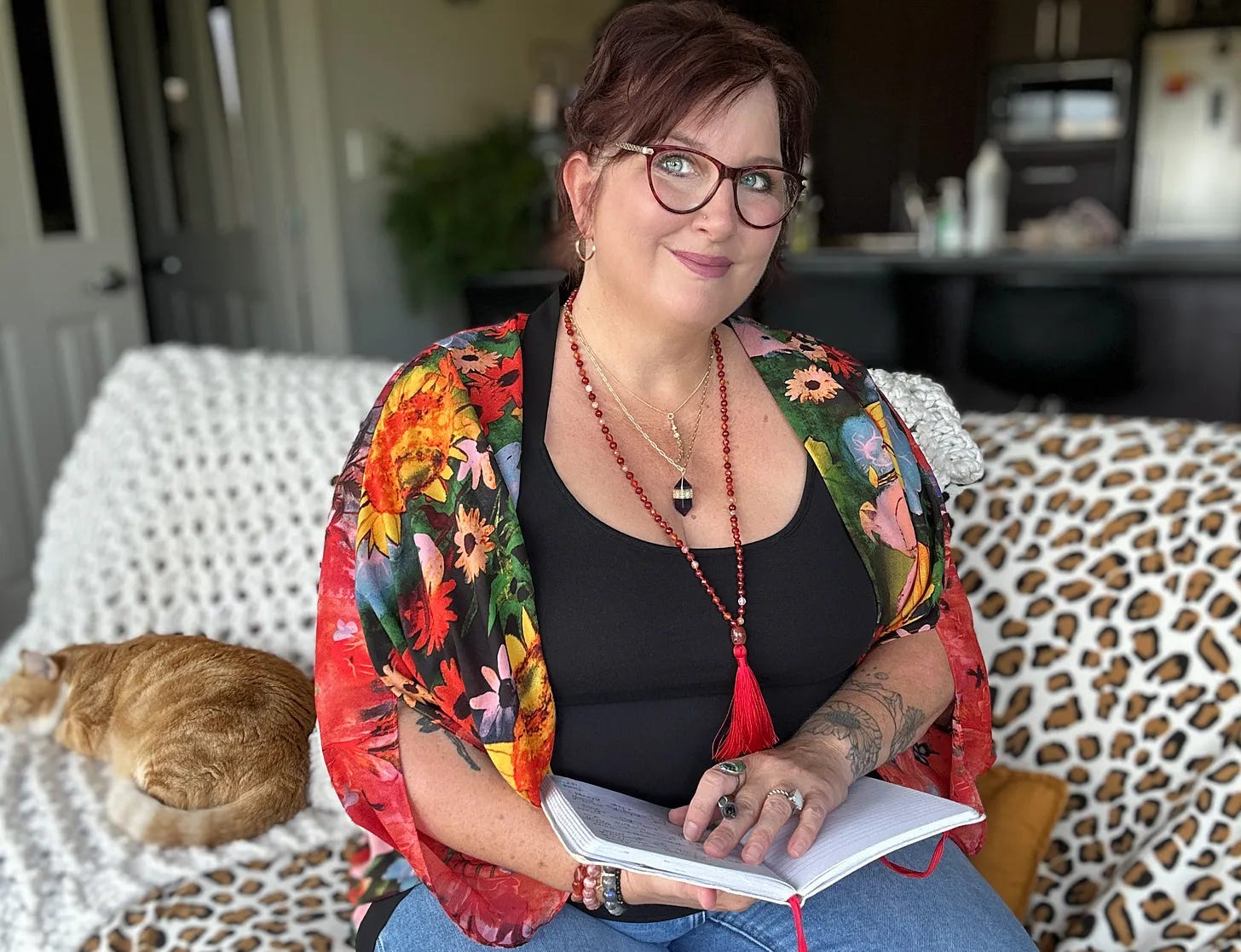
Tanya Valentin is a neuro-affirming family coach, AuDHD parent, author, and podcaster based in Aotearoa, New Zealand. She supports parents of Autistic, ADHD, and PDA children through the long middle of burnout recovery.
Drawing on lived experience and trauma-informed practice, her work explores grief, identity, nervous system recovery, and the quiet return to self-trust.
She is the founder of From Burnout to Balance, a membership community for parents navigating neurodivergent family life, and the author of Tiny Anchors: Small Moments of Care for Parents in Burnout.

The bit about dropping the demand out loud while still holding it in your body is the part most guides skip. Children read the sigh, the hovering, the tone long before they read the words.
In our experience with Australian families, that’s usually the actual turning point — not a new strategy, but noticing the expectation still sitting underneath the softened language. And naming the grief that arrives alongside it is generous. Most people meet that grief thinking it means they’ve done something wrong.