What parenting a child autistic burnout revealed in my marriage that nobody warned me about.
I have been married to the same person for thirty years. And there was a season that lasted several years, right in the long middle of our teenager’s burnout, when I honestly did not know if we would make it.
I do not say that lightly.
But I think it deserves a conversation.
A note before you read this. This is one story, not the only way through. If yours looks different, or ends differently, that’s not a smaller version of doing it right.

We talk about how it affects a neurodivergent child. We are slowly learning to talk about what it does to a mother, or the person who takes on the primary carer role. What it does to the two people who are supposed to be holding the whole family up together needs a bit of space too. Because without honest conversations about this, it can often feel like just another thing we are failing at, during one of the most trying times for many parent relationships.
Our children’s teenage years were exceedingly hard on our marriage.
That was paired with my body’s shift into perimenopause, and the reclaiming of self that often happens for women during this process. We also had significant change happening in my family at this time. The move to a new city with two teens and a preteen in tow, not something I would recommend, the discovery of our two older children’s autism in their late teens, COVID lockdowns, and then the subsequent burnout season that spanned three years.
Well, it is no wonder we were struggling.
What nobody warns you about
A family is not a collection of separate people having separate hard times. It is an ecosystem.
When one part of it goes into crisis, the whole system feels it. The relationship between the two adults holding that system together is usually the part carrying the most weight while getting the least attention.
During this season, my husband and I were so focused on keeping our child alive and providing stability for our other children that we stopped noticing what was happening to us. We became roommates. Barely functioning. Each processing the rapid unravelling of life as we knew it in isolation, while co-inhabiting the same physical space.
This is often how a marriage starts to come apart. This is often how a marriage starts to come apart. Not all at once. Not in one dramatic moment. But in a slow accumulation of separation between two people over time. One of us carrying the load that comes with being the primary carer for a child in burnout. Nervous system flooded, touched out and exhausted.
The other working to keep us financially afloat, feeling on the outside of the family.
Both of us grieving. Both of us overwhelmed. Sad, frustrated, and I’m just going to say it, resentful of the other.
How parent dynamics affect the child in burnout and the family ecosystem
A child in burnout is not separate from the ecosystem around them, and that includes how their parents are getting along.
Many children in burnout notice the differences between their parents, and some will quietly, or not so quietly, make this known. The parent who holds firmer boundaries, who pushes for more, can start to feel unsafe to a nervous system that is already overwhelmed. It is not unusual for the child to blame that parent for how hard things feel.
Meanwhile the parent who has become fluent in reading the child’s nervous system, who tends to soften and stay close, gets cast as the safe one.
If you are that parent, this puts you in an impossible middle.
You end up holding the space between your child and your partner, translating one to the other. You often spend a lot of time defending your child to your partner, and defending your partner to your child. This parent is often the one absorbing the tension from both directions so neither relationship breaks completely. It is exhausting in a way that is genuinely hard to explain to anyone who has not lived it.
Awareness and repair to the family ecosystem
This is not something one parent can fix by trying harder to hold the middle, or by being a better buffer. Although many of us attempt exactly that.
It takes both parents becoming aware of the pattern, and then choosing, again and again, to repair it. This often requires understanding the cultural conditioning you received as a child, examining the relationship dynamics of your parents and how this influences the dynamics in the relationship between you and your partner.
Unlearning and then relearning together.
The parent who has become the safe one has to actively bring the other parent back in, rather than letting the triangulation stay comfortable simply because it is familiar. The other parent has to be willing to hear, without defensiveness, why their child may currently experience them as less safe. This often requires a commitment to do the slow work of becoming trustworthy again, rather than expecting trust and respect as though it is owed to them.
Neither of these is comfortable, but both are necessary.
The bigger picture of parenting a child in autistic burnout recovery
There is a bigger more uncomfortable truth underneath all of this. Burnout did not happen because your child was broken.
It happened because the environment they were living in, in all its layers, had become unsustainable. For their nervous system, and often for the other people in your family ecosysetm too.
Sustainable recovery asks for change at every one of those layers.
Physically, in the pace, the noise, and the rest actually available in the home. Sensorily, in what the environment asks a nervous system to tolerate each day. Attitudinally, in what everyone in the house perceives behaviour to mean. Emotionally, in how we make space for our feelings and the feelings of others, rather than being managed, minimised or dismissed. And relationally, in how every person in that home is being met, not only the one who is struggling loudest.
You cannot repair a nervous system inside the same environment that created the conditions it is recovering from. The whole ecosystem has to shift, or the child ends up doing the impossible work of healing inside the very thing that is still making them unwell.
If any of this feels uncomfortable to read, that discomfort makes complete sense. Recognising a pattern you were unconsciously living inside of, is not the same as being told you did something wrong. We all do our best in the patterns we have inherited when it feels like we are just surviving. Most of us do not see these dynamics clearly until we are far enough through them to look back. Seeing it now is not evidence you failed then. It is what becoming able to change it actually looks like.
The backgrounds my husband and I brought into the relationship
Like many parents, we did not arrive at this crisis as blank slates.
We arrived carrying two different childhoods, two different sets of unspoken rules about what emotions were allowed or what they looked like. Two very different ideas of what behaviour means and what a good parent does when a child is struggling.
We were both products of conservative South African culture, from hard-working, religious, working-class families. Neither of our childhoods were trauma-free.
It didn’t occur to me to think you can fully know someone until you parent children together.
Under normal pressure, those differences are just differences. Challenging to work through but in most cases you can navigate around them.

But parenting autistic children and burnout removes our buffer room for navigating around anything. It puts both of you under maximum load all the time and at the same time. Suddenly the differences you used to shrug off become the exact places where you grate against each other hardest.
Somewhere in the middle of our child’s burnout, I started to understand my own neurodivergence. It became evident to me that my children’s struggles and quirks that I had just dismissed as ‘normal’, were pointing to my own unacknowledged neurodivergence.
Along with this came the visibility of co-dependent relationship dynamics within my marriage that I couldn’t unsee.
The parts we had already brushed under the rug
Something that I think a lot of people reading this will recognise, even if they have never said it out loud is:
Chances are, before your child’s burnout ever began, there were already parts of your relationship you were not happy with.
That you left unexamined, brushed under the rug, because let’s face, it felt easier to live with that particular discomfort than to face what dealing with it might actually cost you.
In many cases, burnout does not create problems in a marriage.
Not unlike how it removes an autistic child’s ability to mask, it removes your capacity to tolerate them. Everything you had been managing to live around suddenly has nowhere left to hide. It was this way for us too.
What actually helped us
I am not going to tell you we fixed everything, or that we found some clean resolution that tied it all together and we all lived happy ever after. Real relationships don’t work that way. We still have things now that we regularly have to work through.
Relational safety does not require perfection. It requires rupture and repair, over and over, and choosing to stay and work things out for as long as it takes.
What actually helped was being brutally honest with each other, and naming the unnamable things.
Understanding my own neurodivergence, and his, not as an excuse, but as a way to genuinely know and understand each other and our children.
Recognising and owning our own part in this, and each of us engaging in individual therapy, which required us to let go of the stories we had about what being in therapy meant about us.

In South African culture, men are often taught to push through and not admit they are struggling, and that was the story he had to unlearn just to walk through the door. Mine went back further, to being forced into therapy by my mother as a teenager for ‘acting out.’ That somewhere in me that had quietly become proof that something was wrong with me, long before it ever had anything to do with parenting or my marriage.
Still here
What many people don’t realise is that repair in your relationship is part of the recovery process and sometimes separation is too.
I am not publishing this as an exemplar of what parent relationships should look like when parenting a child in burnout. For some families choosing to separate so the whole family can heal is ultimately the right choice for them.
Not everyone reading this has what we had available to us. We could afford therapy when we needed and were both willing to look at our own part in this, not just the other’s. Underneath everything, our relationship was fundamentally safe, nobody holding power over the other. Neither of us felt trapped by the other in the relationship and I realise that not everyone has access to these things.
If your story looks different from mine, if it ends differently, or hasn’t ended at all yet, none of what follows is a measure of what you’re failing to do. It what I had access to.
We are still married and this not because we got it right most of the time. This has only been possible because we kept coming back to each other. Even after the seasons that changed so much about who we are as people and how to be in relationship with these selves now.
If any part of this is landing for you, please know that you are not alone in it.
You are not failing at your marriage simply because burnout has revealed the cracks that were already there. There is a whole community of parents navigating this stuff too. Come and find us when you are ready.
For readers who want to go deeper
Mikolajczak, M., Raes, M., Avalosse, H., & Roskam, I. (2018). Exhausted parents: Sociodemographic, child-related, parent-related, parenting and family-functioning correlates of parental burnout. Journal of Child and Family Studies, 27, 602 to 614. https://doi.org/10.1007/s10826-017-0892-4
One of the foundational studies establishing that family functioning, not just individual stress, is closely tied to parental burnout.
Brown, M., et al. (2020). A dyadic model of stress, coping, and marital satisfaction among parents of children with autism. Family Relations. https://onlinelibrary.wiley.com/doi/abs/10.1111/fare.12375
Looks specifically at how couples raising autistic children cope together, and how that shared coping shapes both marital satisfaction and parenting stress.
From perfectionistic concerns to parental burnout via parenting stress: Actor partner interdependence mediation models in couples raising a child on the autism spectrum. (2026). Journal of Autism and Developmental Disorders. https://link.springer.com/article/10.1007/s10803-026-07487-x
A study of 136 mother father pairs that found parental burnout in these families is genuinely a two person process, not something happening to one parent alone.
Marital satisfaction and perceived family support in families of children with autism spectrum disorder: Dyadic analysis. (2022). Healthcare, 10(7). https://www.ncbi.nlm.nih.gov/pmc/articles/PMC9322168/
Nearly 800 couples studied together, finding that time spent caregiving and perceived support from each other predicted relationship satisfaction differently for parents
Carone, N., & Lingiardi, V. (2022). Untangling caregiving role from parent gender in coparenting research: Insights from gay two father families. Frontiers in Psychology. https://doi.org/10.3389/fpsyg.2022.863050
A genuinely useful piece for understanding why caregiving roles fall the way they do. By studying families where both parents are the same gender, it helps separate what’s about being a mother or father from what’s about cultural expectation.
Parent dyadic coping and parent-child relationship quality in families of autistic children. (2025). ScienceDirect. https://pmc.ncbi.nlm.nih.gov/articles/PMC13441416/
Found that a mother’s satisfaction in her marriage was linked to the quality of her partner’s relationship with their child too, showing how connected these two relationships really are.
About the Author
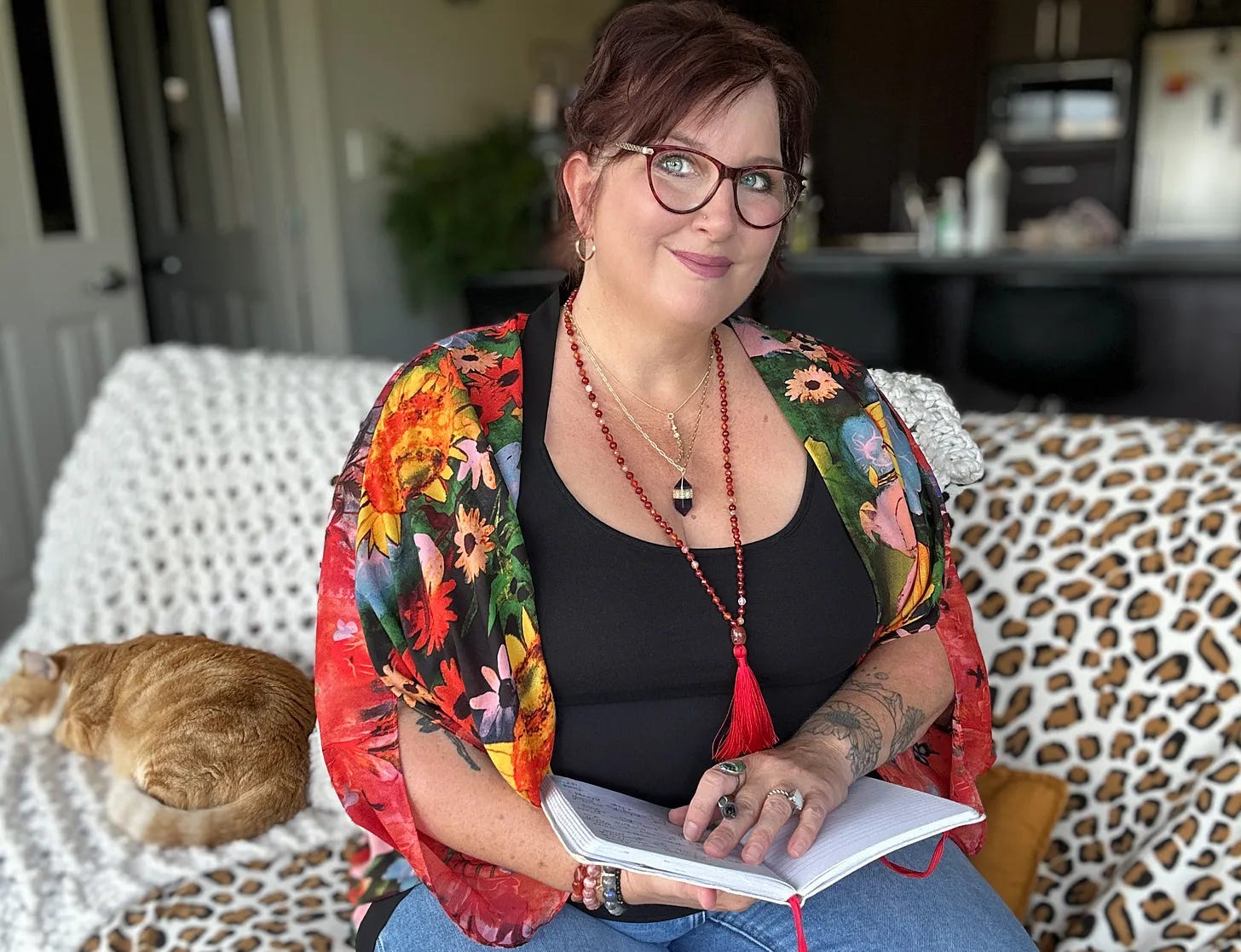
Tanya Valentin is a neuro-affirming family coach, AuDHD parent, author, and podcaster based in Aotearoa, New Zealand. She supports parents of Autistic, ADHD, and PDA children through the long middle of burnout recovery.
Drawing on lived experience and trauma-informed practice, her work explores grief, identity, nervous system recovery, and the quiet return to self-trust.
She is the founder of From Burnout to Balance, a membership community for parents navigating neurodivergent family life, and the author of Tiny Anchors: Small Moments of Care for Parents in Burnout.