Tanya Valentin
Neuro-Affirming Support for Parents Navigating The Long Middle of Burnout Recovery
The Meme That Nearly Broke Me
When my children were little, I saw a Facebook meme that nearly broke me.
It said. “My goal in life is to raise a child who doesn’t need to heal from their childhood.”
On the surface, it felt so positive. Aspirational even.
I remember reading it late at night, looking down at my sleeping baby and toddler. I made a quiet promise. This will be our family’s story.
But I had no idea what I was really promising. Without realising it, that sentence became my gold standard of parenting.
All through my children’s childhoods, I tried so hard to make it true. I read the books, followed the advice, did all the things a “good” mother was meant to do.
When good stopped being enough
A few years later, my children were struggling. They were anxious much of the time. School was hard and I didn’t know what to do to fix this.
Because I had made that meme my benchmark, I believed this meant I had failed.
I was no longer a “good” mother.
The shame was enormous. I am ashamed to admit that at first I buried my head in the sand and tried to fix everything myself. I delayed asking for help. I could not bear for the truth to be seen.
When I finally did ask, and sat across from counsellors, cold dread moved into my body. I shut down, eyes cast on the floor, dissociating my way through the meeting. I couldn’t believe that I had gotten it so wrong.
I was certain they could see what I could barely admit to myself. That I had failed at the “good parent” mission life had given me, and that I was being quietly measured and found wanting.
So I did what I was told. I sat in the waiting rooms. I followed the plans. I trusted that the people with the credentials knew something I did not.
And things kept getting harder at home, not better.
So I started researching and reading. One morning at 3 am, unable to sleep, I read a post by Dr Megan Anna Neff’s . One thread led into the next, until I found two words I had never heard before.
Autistic burnout.
Something in me went still. It was the first time anything made sense.
Then came the lonely part.
Almost everything I read about recovery went against what I had been told. Our GP had never heard of it and neither had the specialists. There was no map, and no one to ask. I had to choose between the experts and the quiet knowing in my body.
I chose my body.
From good to brave
As I learned more about autistic burnout, I found myself moving further and further from the path of “good” parenting and onto an off the grid terrain of brave parenting.
At first, this was deeply hard. My undiagnosed AuDHD had taught me that safety meant people pleasing, managing other people’s emotions and expectations, playing by the rules, not making waves. Never becoming “that parent”.
But my children did not need a rule follower who simply went along with whatever she was told. They needed a mother who would listen, take responsibility for her own shit, stay present when things got hard, and advocate in a world that did not understand.
They needed a brave mother.
Brave mothers disrupt smoothness. We advocate, accommodate, slow down and refuse harmful expectations.
Disruption, I have learned, is rarely rewarded.
When I was little, my dad told me about a baby elephant sold to a circus. The keeper chained one of his legs to a pin in the ground. He pulled and pulled and could not break free. Years later, strong enough to walk away with ease, he stayed. The chain no longer held him. What he had learned to expect did.
Shame does that to mothers. It tells us we should be coping better. It becomes the chain, and we forget that it is structural, not personal.
And when I stepped away from “good,” my body sounded the alarm. Years of people pleasing had taught my nervous system that good meant safe.
No wonder this was so hard.
What I now know after years of living in the long middle of burnout recovery
Here’s what I didn’t know to expect; this experience changes us as parents and it changed me and my life in ways that I am still processing today. Underneath it all was grief. Grief for the childhood that my children didn’t get to live. Grief for the mother I thought I would be. Grief for how hard it really was.
And there were so many things I needed to let go of, so many things I had to unlearn and relearn again in a new way.
Here are some of the lessons parenting an autistic child in the the long middle of burnout recovery taught me:
Burnout doesn’t just affect the child. It affects the whole family. My other children felt it. My marriage felt it. I felt it in my body long before I had words for any of it.
I learned that recovery doesn’t move in a straight line. A good day didn’t mean we had turned a corner. A hard day didn’t mean we were back at the start. Moving backwards wasn’t failing. It was how nervous systems heal.
I learned my own nervous system mattered as much as my child’s. When I was regulated, the house settled. When I wasn’t, everyone felt it before I said a word.
I learned there was no timeline. No clean before and after. Just a long, unglamorous middle, and I had to learn to live inside it rather than wait to get through it.
And I learned I couldn’t hold it all myself. The part of me that was tending everyone else needed tending too.
“Good parenting”, as I had understood it, meant the least disruptive, the most compliant and the most self erasing. I had been so busy being a “good” mother that I had disappeared.
Brave mothering has been a coming home. I stopped measuring myself against a meme. I began to trust what my body knew. Slowly and imperfectly, I began to trust myself again, and that trust became the beginning of everything.
I also learned that my children’s recovery and my own were never separate. The child heals within the ecosystem, and the ecosystem shifts when the mother is truly supported.
Parents come to me for their child. I hope they discover, as I did, that they are allowed to stay for themselves.
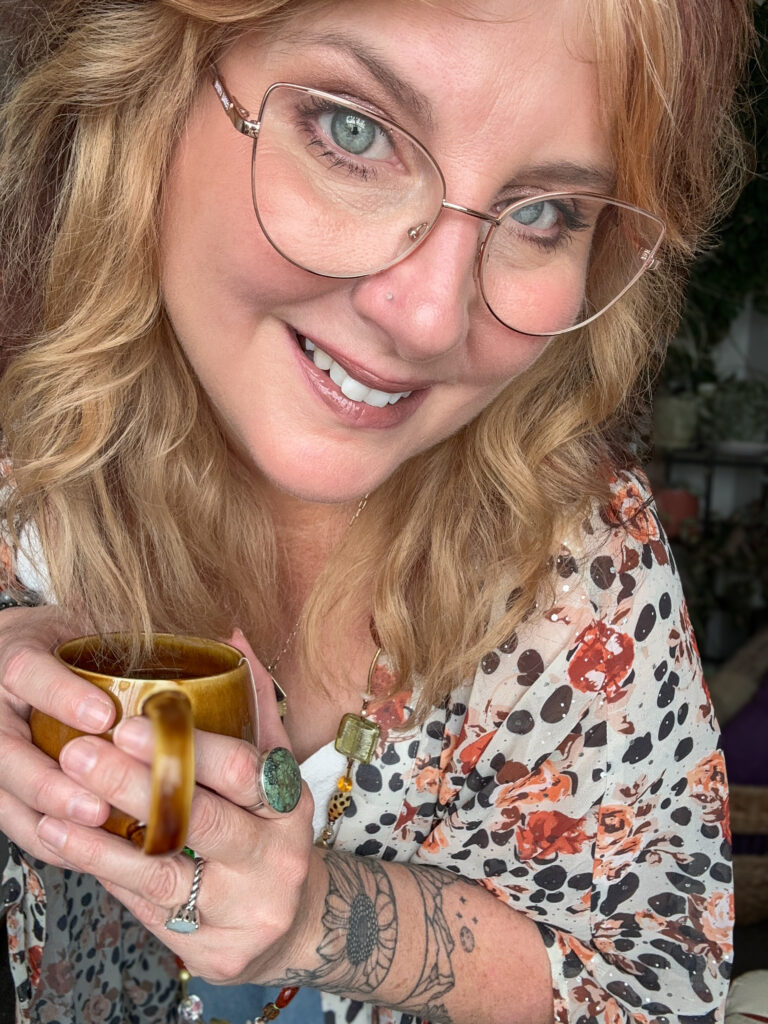
Meet Tanya
I am an AuDHD mum of three, a neuro-affirming family coach, author and podcaster. I support mothers of neurodivergent children who are navigating the long middle of autistic burnout recovery.
I am the founder of From Burnout to Balance, co-host of the Meltdowns Menopause and Magic podcast with Emma Gilmour, and the author of Tiny Anchors. I have spent more than two decades in education and adult learning.
I am also a fur and plant mum, an unashamed tree hugger, a star gazer and a collector of pretty rocks. My values are respect, freedom, inclusion and community.
Next steps
There is no right place to begin, and no rush. When you’re ready, there are a few gentle doors that you can explore.
If you need to feel less alone
Tiny Anchors is a free ten day journey. A short email, a voice note and a phone wallpaper each day. It asks nothing of you.
tanyavalentin.co/tiny-anchors-support
If you are looking for a map
On the long middle page, I walk you through the three stages and help you find where your family is right now.
tanyavalentin.co/the-long-middle
When you are ready for somewhere to land
From Burnout to Balance is a gentle, low demand community for parents in the long middle. It is here when you are ready.