Why Friendships Unravel When Your Neurodivergent Child is in Burnout
I was recently reading a Substack post by The Autism Doctor about how many women are not diagnosed as autistic simply because they“have friends.”
In the post, she explains that the outward presence of friendships does not necessarily mean those relationships foster genuine connection or belonging. Instead, they can be social constructs that many autistic women learn to maintain in order to fit in with the world around them.

Reading this prompted me to reflect on my own friendships and my sense of belonging (or lack of it) within friendships as a late-diagnosed AuDHD woman. It also brought me back to my experience of how small my world became when my daughter went into burnout, and how many relationships quietly fell away when I no longer had the time, energy, or capacity to maintain them.
The loss of connection, friendships, and the grief that accompanies this is something many parents in my parenting community, From Burnout to Balance, speak about. Ask any parent of a child in burnout, and they will tell you: this is an incredibly isolating experience, and it is isolating for many reasons.
What I would like to gently challenge is the perception and the guilt that many mothers, in particular, carry when relationships begin to fall apart — the quiet belief that this must somehow be their fault.
Why “Having Friends” Is a Misleading Measure for Neurodivergent Women
When I reflected, what I began to notice was that the isolation I felt wasn’t just about time, capacity, or changing circumstances.
It was about what kind of relationships I, and so many of the other mothers I work with, have been holding long before burnout arrived.
For many mothers, and particularly for neurodivergent mothers, including autistic mothers, friendships have often been built on quiet adaptation. On being easy to be around. On smoothing feathers, minimising needs, not bothering others, or being“too much“.
Somehow, we’ve internalised that the price of friendship is staying connected at all costs. These relationships can look intact from the outside, yet feel surprisingly lonely on the inside. We are often carrying the lion’s share of the emotional labour, while still finding ourselves forgotten, overlooked, or quietly left out.
When a child enters burnout, the margin for this kind of self-abandonment disappears. Our nervous systems simply cannot sustain it anymore. What once felt manageable begins to feel painfully heavy, and the relationships that relied on us continuing to bend, absorb, justify, and over-function start to strain or fall away.
Many Autistic women, learned early that proximity was safer than honesty. That being agreeable was the price of belonging. That discomfort was normal, and loneliness was something you swallowed quietly.
The Autism Doctor
This is not a personal failing.
It is not a lack of resilience.
And it is not evidence that we are “bad at relationships.”
Rather, it invites a deeper question, not why connection feels harder now, but what these experiences are revealing about the nature of connection itself, and the hidden costs many neurodivergent women have paid to belong.
Burnout and the Hidden Cost of Social Survival
When a child enters autistic burnout, a mother’s capacity shrinks in very real, embodied ways. Suddenly, life becomes smaller, vigilance increases, and the nervous system stays on constant alert. All your available bandwidth and executive functioning are used up trying to survive the day.
For neurodivergent mothers, including autistic mothers, this often means the cost of masking becomes impossible. Parenting a child in burnout has a way of burning away all of the bullshit, and you see things that you simply can’t unsee or tolerate any longer.
Keeping relationships alive is hard work, and suddenly, replying “the right way” is too much; laughing things off feels impossible. Explaining yourself again feels exhausting. Tolerating subtle dismissals hurts too much.
And relationships that relied on us adapting, rather than mutual care, begin to fall away.
From the outside, this can look like withdrawal, but from the inside, it can feel like honesty, relief, and grief.
Burnout doesn’t make mothers less capable of connection.
It removes the capacity to disappear inside relationships that don’t hold them.
How the Inner Shifts of Parenting a Neurodivergent Child in Burnout Can Intensify Isolation
If you’ve been following my work for a while, you may have heard me speak about my daughter’s burnout as the catalyst for a spiritual awakening I wasn’t expecting.
Traumatic and life-altering experiences have a way of shaking us awake, bringing into sharp focus what truly matters. Parenting a child through burnout is no different. It disrupts the narratives we were living by and exposes the quiet compromises we’ve made along the way.
When my daughter went into burnout, it felt as though floodlights were suddenly turned on in my life. They illuminated everything I had been ignoring, tolerating, or pushing through, not just externally, but within myself. Long-standing patterns, unspoken dynamics, and ways of being that were no longer serving my family became impossible to unsee.
From the outside, it may have looked as though my world was changing. But the most profound shift was internal, a change that was largely invisible to others.
And here’s the part we rarely talk about: I changed, but the world around me did not.
I found that I no longer fit comfortably inside my life, yet I couldn’t articulate why. The values I was orienting toward had shifted. My tolerance for misalignment had narrowed. And this deep internal re-patterning quietly widened the rift I had already felt in many of my relationships, intensifying the sense of isolation that had been present long before burnout arrived.
What this period revealed was that the ache of disconnection I was feeling did not begin with burnout, but with much older relational imprints many women are shaped by long before motherhood.
The Sister Wound and Why Community Feels Unsafe
Layered underneath this is something many women carry but rarely name: the sister wound.
The sister wound is the collective trauma of being raised in cultures that teach women that other women are competition, closeness is conditional, safety comes from fitting in, and exclusion is always a risk.
From early on, many girls learn that belonging can be taken away at any moment, through gossip, comparison, social hierarchies, or subtle power dynamics.
For neurodivergent, ADHD, PDA and autistic girls and women, this wound is often intensified as they are more likely to miss social subtext, be scapegoated or misunderstood, be tolerated but not protected or stay in relationships where they are the one who is constantly adapting and pushing past their personal boundaries to make others comfortable.

So even when friendships exist, there is often an underlying vigilance:
Am I too much? Not enough? Saying the wrong thing? About to be excluded?
This creates a paradox many mothers recognise deeply: the longing for community and deep distrust for the very community that they crave.
Why Mothers Experience Isolation During Child Burnout
When my child went into burnout, I suddenly found myself needing support in ways I never had before.
I needed flexibility, understanding, low-judgment presence and a space to not be okay.
But many of the friendships I’d maintained were built on the opposite foundations, such as emotional availability, overgiving and being ‘easy one’.
A childhood that had primed me for people pleasing and hyperindependence did not give me the skills I needed to ask for help or talk about my experience, and so I just shut down.
This caused a lot of shame and reopened old wounds that you may feel familiar with: “I’m too much”, “I’m only valued when I’m useful“, “I’m not chosen”, “When I struggle, I’m abandoned.”
The Grief No One Talks About
There is a grief that comes with realising that many friendships you worked so hard to maintain were never built on reciprocal connection and trust.
I felt a deep grief for the young mother who tried so hard, at playgroups, in the schoolyard, and even within church communities, to make and sustain friendships where she never quite felt like she belonged.
There was grief for the energy spent, the self-betrayals required, and the loneliness that existed even when I wasn’t alone. The quiet, internalised belief that the absence of meaningful connection was somehow my fault.
And grief for the hope that this time, when I finally needed support, it would be different.
That grief was compounded when I began to notice the same patterns of “friendship-making” emerging in my own children; the adapting, the over-giving, the longing to belong, and the subtle erasing of self to stay connected.
Then came the quieter, more brutal realisation: that the experience of my child’s burnout, and the absence of what are often considered “primary” social skills, positioned me even further on the outside.
Re-imagining Community Through a Low-Demand Lens
Despite all of this, healing does not happen in isolation. Humans are meant to be in a village.
In the absence of this depth of community, the safe container is difficult to find. By default, we become the container ourselves, and when this happens, we cannot drop into the well of grief in which we can fully let go of the sorrows we carry.
Francis Weller
But for mothers in burnout, especially autistic mothers, community must look different.
For mothers of children in burnout to heal in community, they need to be low-demand, non-competitive, consent-based, spacious enough for inconsistency and safe enough to rest, not perform.
Community can no longer ask women to disappear in order to belong, but instead, it must offer something radically different: being believed, met without urgency and being allowed to show up exactly as they are.
This is not about fixing isolation by “trying harder” socially. It’s about re-learning what safe connection feels like, often slowly, cautiously, and with great tenderness.
If This Resonates…
If friendships have fallen away during this season, it doesn’t mean you are broken, failing, or becoming less capable. It may mean you are no longer willing, or able, to survive at your own expense. This realisation can bring up a lot of grief, but it is also powerful because when we let go of relationships that no longer serve us, we can make space for those that do.
And while that can feel unbearably lonely, it can also be the beginning of something more honest.
A quieter, truer form of connection. One that doesn’t ask you to disappear or cede your sovereignty in order to belong.
If this resonates, I want you to know that you don’t have to navigate this alone.
From Burnout to Balance was created for parents walking this exact terrain: the grief of lost connection, the identity shifts that come with burnout, and the longing for community that feels safe enough to rest in. It is not a space that asks you to perform closeness, keep up, or be anything other than where you are.
Here, community is built slowly and intentionally through shared language, mutual understanding, and a deep respect for nervous-system limits. You are welcome to arrive quietly. To take up space gently. To be witnessed without being fixed or to witness others from the sidelines until you feel comfortable engaging with others.
This is our attempt to create a different way of being together, one shaped by care rather than competition, connection rather than comparison, and belonging that doesn’t cost you yourself. It is a low-demand space, with room to arrive and participate in ways that honour your nervous system and capacity.
If you’ve been longing for community but struggling to trust it, you are not alone in that, too. And when you’re ready, there is a place where you don’t have to disappear to belong.
The Person Who Wrote This Blog
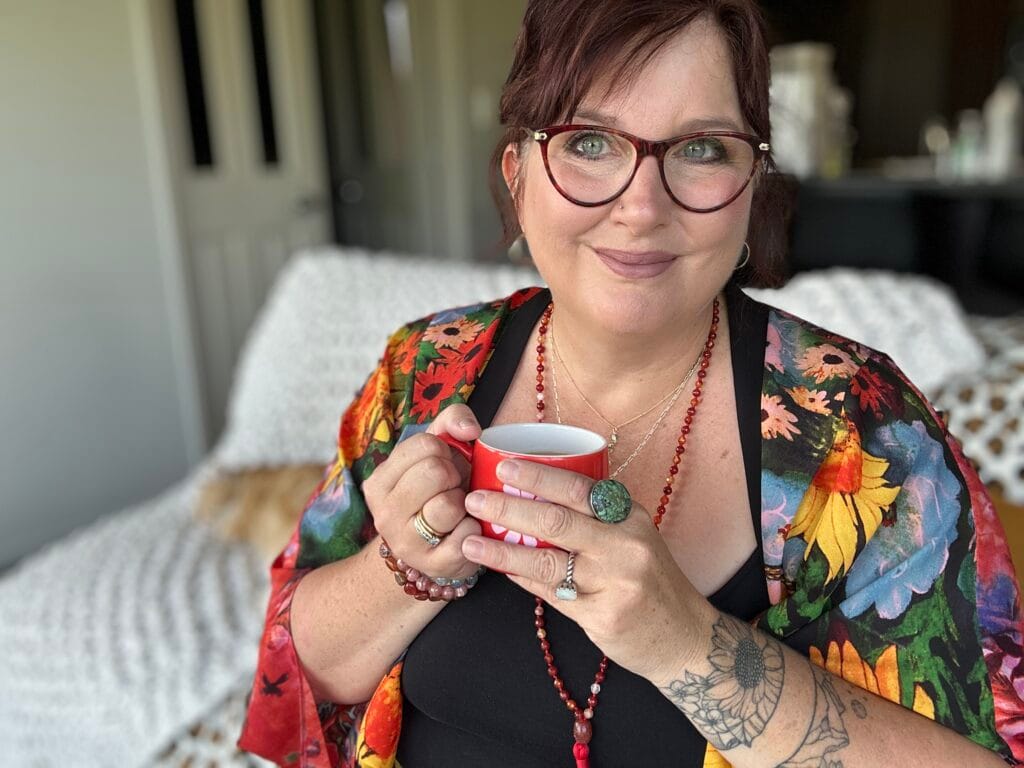
Tanya Valentin is a neuro-affirming family coach, writer, and community leader supporting parents of neurodivergent children through burnout recovery.
Drawing on lived experience, nervous-system-informed practice, and relational facilitation, her work explores grief, identity, and the quiet return to self-trust.
She is the founder of the supportive community who are parenting neurodivergent children and teens in burnout, From Burnout to Balance.
Have you enjoyed reading this blog? Subscribe and receive fresh reflections, parenting resources and validation every time I push publish.