On the surface, it felt so positive. So aspirational. And to a mother who had already done significant healing from her own childhood, it felt like a dream come true.
Without realising it, that sentence became my gold standard of parenting.
All through my children’s childhoods, I tried really hard to make it true. I read all the books. I followed the advice. I did all the things a “good” mother was meant to do, often to my own detriment.
Fast forward a few years, and my teenagers were struggling.
They were anxious much of the time. Depressed. Struggling at school. Struggling in ways I didn’t yet have language for.
And because I had made that meme my benchmark, I believed this meant I had failed.
I was no longer a “good” mother.
I carried so much shame that, at first, I buried my head in the sand and tried to fix everything myself. I delayed asking for help. I couldn’t bear to let the truth be seen.
When I finally asked for help and took them to therapy, sitting across from counsellors, shame moved into my body. I was certain they could see what I could barely admit to myself, that I had failed at the “good parent” mission life had given me, and that I was being quietly measured and found wanting.
The Diagnosis That Changed Everything
Then burnout came.
My daughter was hospitalised after an attempt to end her life. My world imploded, and I could no longer hide from myself or from others the story that I was a “bad” parent.
I remember asking myself, over and over again:
How did things go so wrong?
And then came the news that truly shook the foundations of my life.
My children were autistic. And as I later found out, so was I.
At first, I had no idea what this meant or how profoundly it would change everything.
What I couldn’t see yet was that this moment would challenge, fracture, and ultimately reframe many of the silent contracts I had made with life.
In The Four Agreements, Don Miguel Ruiz writes about the unconscious agreements we make during our “domestication”, the beliefs we absorb about who we are, what love looks like, and what it means to be “good.”
We don’t choose these agreements deliberately. They are shaped for us by our caregivers, our culture, and our systems, and we mistake them for truth.
It is often only when something seismic happens, a diagnosis, a crisis, a child falling into burnout, that we notice the first tear in the fabric of that reality.
And in that rupture, we discover something both terrifying and liberating:
These agreements had been made, and what’s been made can be unwritten.
Where Does Our Obsession with “Good” Come From, and Who Gets to Decide What “Good” is?
“Good” sounds benign. Reassuring, even. But good is never neutral.
Whenever we use the word good, we’re usually not describing care; we’re describing compliance with a set of values that someone else decided mattered.
So the real questions become:
Good, according to whom? Good, for what purpose? And good at what cost?
“Good” Parenting as a Cultural Construct
“Good” is a cultural construct, not a universal truth. What counts as a“good” parent shifts wildly across time, cultures, class, race, ability, and politics.
In our Western culture, at different points in history, a “good” mother was expected to:
Obey her husband
Produce many children
Keep children quiet and unseen
Enforce discipline through fear
Raise productive workers
Prioritise obedience over well-being
For example, in the late Victorian era, “good” mothers were encouraged to follow strict schedules, feeding by the clock, limiting physical affection, avoiding kissing, and leaving babies to sleep alone. Much of this guidance came from male doctors and early child-rearing authorities who warned against “spoiling” children and believed that too much tenderness would weaken character.
These ideas about “good” parenting have left a long shadow over Western parenting culture. They did not emerge from an understanding of children’s nervous systems or developmental needs, but from the social, economic, and political conditions of the time, particularly those shaped by the industrial revolution, which required compliant, self-regulated, and productive future adults.
Religious Influences on “Good” Parenting
Over the years, religion has also shaped how our culture perceives “good” parenting. In many religious contexts, “good” parents raise obedient, quietly compliant children who are respectful of authority.
As the daughter of a pastor, my childhood was largely shaped by the bible teachings of “Spare the rod and spoil the child” and “Children are meant to be seen and not heard.”
In my Christian upbringing, children were considered sinful beings who needed controlling and correcting. I was told that God was always watching and would be judging my behaviour as “good” or “bad”, “worthy” or “unworthy”.
Something that had a huge influence over my concept of “good” well into my adult years.
When “Good” Parenting Becomes a Moral Measure
When we consider the cultural and religious influences on modern parenting, when parents today feel like they are failing at “good,” it’s worth asking:
Failing who, exactly?
“Good” parenting has always been defined from the outside.
A framework with have to fit into. Boxes we need to tick. Gold stars of approval we need to earn.
Most definitions of good parenting are created by:
Institutions (schools, medical systems, governments)
Dominant cultural norms (often white, middle-class, neurotypical)
Productivity-focused societies
Behaviourist frameworks that prioritise control and outcomes
These systems reward parents whose children are regulated in public, compliant with authority, successful in school, socially palatable and easy to manage.
Within these systems, our children’s behaviour is read as a moral measure of our parenting. The risk of losing acceptance and belonging can quietly take centre stage, pulling our focus away from the unmet needs beneath the behaviour. This was something that strongly influenced my early parenting, as I described in the opening paragraphs of this blog.
Which means that parents of neurodivergent children are set up to fail from the start, not because we are doing something wrong, but because our children cannot and should not contort themselves to meet those expectations. And when neurodivergent children do mask up to fit in with cultural expectations, this is when we see a decline in physical, emotional and mental well-being, often leading to burnout.
When you strip it back, good parenting is often shorthand for not needing extra resources, not drawing attention, not making others uncomfortable, not challenging the system.
A “good” parent stays quiet and keeps things running smoothly.
Why “Good” Parenting Stops Working When a Child Is Struggling
When my daughter went into burnout, I found myself moving further and further away from the path of “good” parenting and, instead, forging an off-the-grid path of brave parenting.
At first, this was deeply challenging. As an undiagnosed AuDHD woman, I had learned to find safety in people-pleasing; in managing other people’s emotions and expectations, in playing by the rules, and in not making waves.
I had avoided ruffling feathers, being “too much,” or becoming that parent.
But my daughter and my other children didn’t need a rule-follower who simply went along with what others told her to do. They needed a parent who would listen, take responsibility for her own shit, stay present when things felt hard, and advocate for them in a world that didn’t understand.
They needed a bravemother.
And brave mothers often disrupt smoothness by advocating, accommodating, slowing down, or refusing harmful expectations.
When I was a young child, my dad told me a story that stayed with me.
There was once a baby elephant sold to a travelling circus. When he was still a calf, the elephant keeper placed a cuff around one of his legs, attached to a chain that was pinned into the ground. The calf struggled and pulled, but no matter how hard he tried, he couldn’t break free. The cuff was heavy. The chain felt immovable.
As the elephant grew, the keeper replaced the cuff with larger ones to fit his leg, but the chain and the pin remained the same.
In time, the calf became a powerful, fully grown elephant — strong enough to lift his leg and walk away with ease. And yet, he didn’t. The training had taken hold. The restraint now lived in his belief, not in the chain.
He stayed, captive not by force, but by what he had learned to expect.
We don’t need police for “good parenting.” Shame does the job beautifully.
Parents internalise the rules and begin to monitor themselves:
“I should be coping better“
“Other parents manage thisso should I”
“If I were a good parent, my child wouldn’t be struggling“
This is how cultural expectations become our own version of the cuff and the chain pinning us to the ground, slowly over time, becoming self-criticism, hypervigilance, and chronic guilt.
And because shame feels personal, we forget that it is structural.
“Good” Collapses Under Complexity
The moment a child enters burnout, disability, trauma, or neurodivergence, the idea of a single, fixed “good” parenting standard becomes not just unhelpful but dangerous.
Because “good” leaves no room for context or nuance, it punishes adaptation, interprets responsiveness as weakness, and frames survival strategies as moral failure.
Brave motheringemerges precisely because “good” can no longer hold the reality. But this shift does not come without its challenges. Over time, our bodies learn to associate “good” parenting with safety. When we begin to question it or adapt how we parent, our nervous systems often sound the alarm, pulling us back toward what feels familiar and predictable.
Unlearning years of automatic programming and learning to parent with intention instead takes real work. Parenting a neurodivergent child, and especially a child in burnout, often requires doing the opposite of what we were taught, while everyone around us continues to follow the same outdated rules.
So we are not only pushing against cultural conditioning, but we are also working against our own nervous systems, and this takes great courage.
“Good” parenting social structures ask us to consider:
How does this look?
Will this be judged favourably?
Does this align with the rules?
Brave mothering asks:
What does my child need right now?
What reduces suffering, even if it costs me approval?
What am I willing to unlearn to stay in relationship?
And those two paths often diverge sharply.
Most parents don’t stop striving to be “good” because they don’t care or are trying to be a maverick.
They stop because the cost to their children and the relationship they have with their children becomes too high.
Many of our children’s well-being demands something different because their nervous system can no longer survive the pressure.
Brave mothering isn’t about going against what makes us human. It’s about refusing to let someone else’s definition of “good” silence our humanity.
If you are finding yourself standing at the edge of this shift. No longer able to parent by the old rules, yet unsure how to trust what is emerging, you are not alone.
Brave mothering is so much easier to do when you have the backing of other brave mothers.
This shift from “good” parenting to brave mothering is something I support parents through inside From Burnout to Balance, a space for those navigating burnout, shame, and the slow work of rebuilding safety.
From Burnout to Balanceexists as a soft place to land for parents walking this brave, unfamiliar path. It is a space where nervous systems are honoured, where shame is met with compassion, and where you don’t have to prove your goodness to belong.
You are welcome to come exactly as you are, to be supported as you relearn how to parent, and care for yourself in ways that are compassionate, responsive, and true.
The Person Who Wrote This Blog
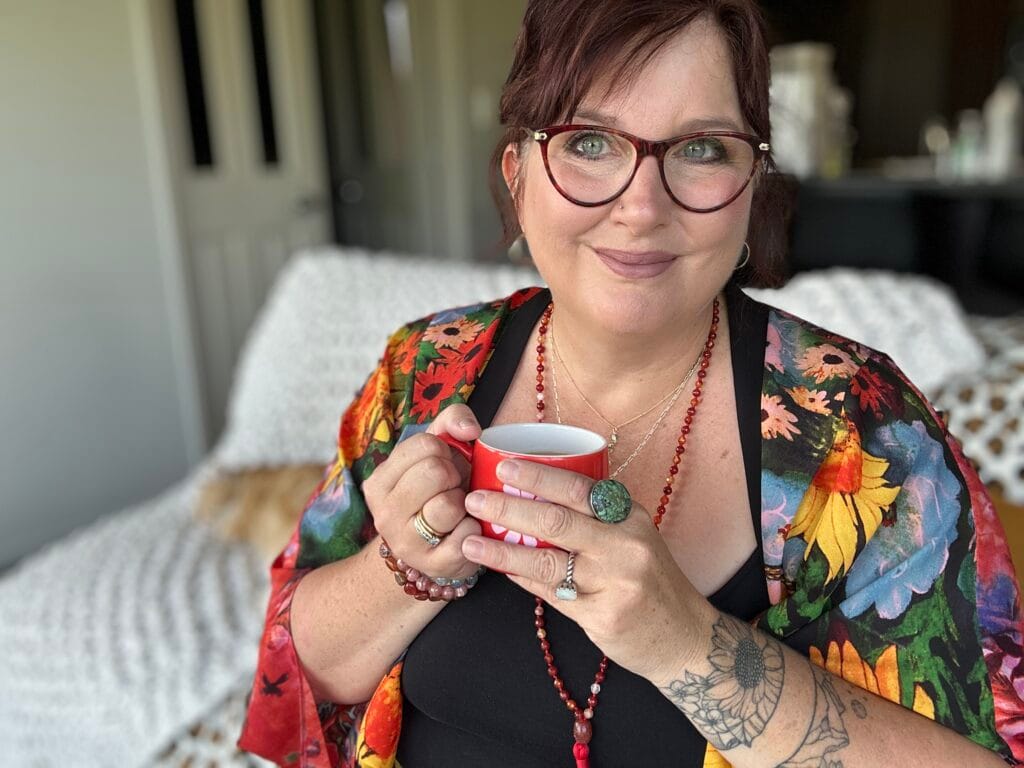
Tanya Valentin is a neuro-affirming family coach, writer, and community leader supporting parents of neurodivergent children through burnout recovery.
Drawing on lived experience, nervous-system-informed practice, and relational facilitation, her work explores grief, identity, and the quiet return to self-trust.
She is the founder of the supportive community who are parenting neurodivergent children and teens in burnout, From Burnout to Balance.
Have you enjoyed reading this blog? Subscribe and receive fresh reflections, parenting resources and validation every time I push publish.
References
Christina Hardyment (1983) – Dream Babies: Childcare from Locke to Spock
1 Comment on Becoming a Brave Mother in a World That Rewards “Good Parenting”